Meta has expanded its affiliate partners program to more partner brands, while it’s also making it easier for creators to link to products as part of affiliate promotions, and providing more check-out options to drive in-stream shopping activity.
First, after expanding its affiliate program to more creators earlier in the month, Meta is now also adding more brand partners to its affiliate promotion options.
Meta’s self-serve affiliate program enables creators to add affiliate links to their content from a range of brands, from which creators then earn commissions from any sales generated as a result.
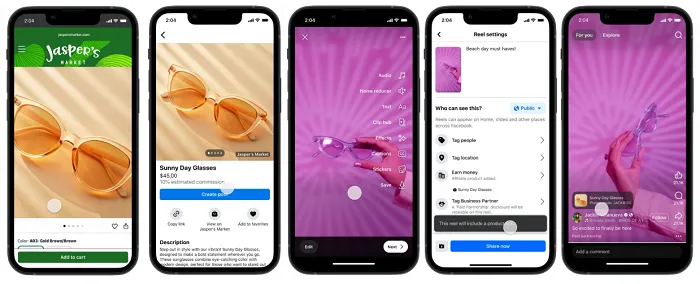
Meta initially partnered with Amazon and Shopee for these links, but it’s now also adding products from eBay and Temu in the United States, and Mercado Libre in Latin America.
That’ll give creators more monetization opportunities, with brands able to disallow links within creator conent if they choose.
In addition to this, Meta said that it will also begin testing similar affiliate experiences on Instagram this coming Spring, beginning with Amazon in the United States and Shopee in Asia.
And with more and more brands looking to tap into the popularity of Reels, which are driven by creative approaches, it could be a valuable consideration, which will offer more potential for brands to link into creator endorsements.
Meta’s also adding product links in Reels, which can be actioned by linking to a brand’s catalog (already uploaded to Meta), or via URL.
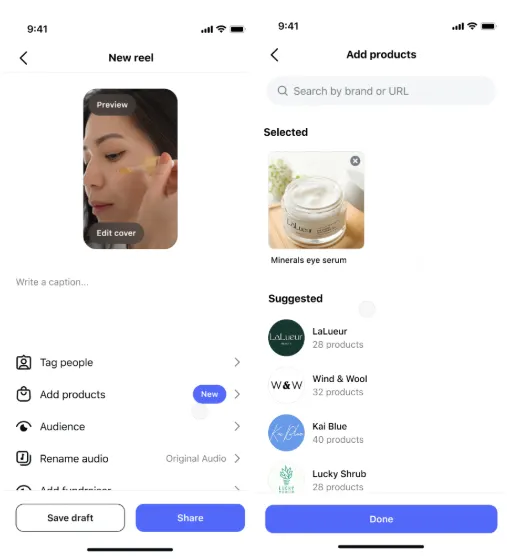
As per Meta: “This spring, creators will be able to add product links from businesses in 22 countries, helping more people find products in Reels.”
So again, more opportunities for creators, and a simplified promotion option for brands, which could deliver more value than straight promotions, given the influence of popular creators.
Interestingly, Meta recently also ran a test which automatically added product tags to creator content, via a “Shop the Look” button on posts.
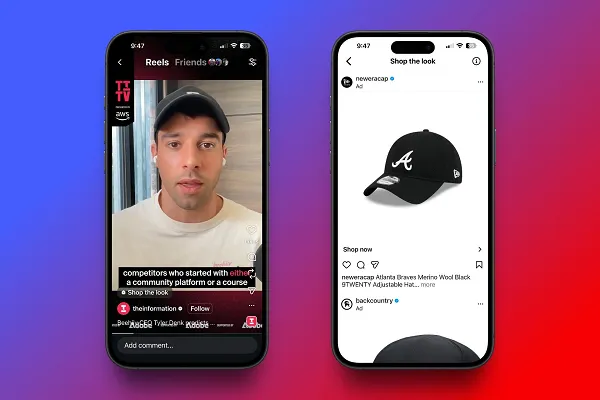
That was less well-received by creators, as it gave them no say over the brands associated with their content, and no commission from resulting sales.
It’s unclear whether Meta is pushing ahead with this initiative, but it’s another example of Meta looking to integrate shopping into its apps.
Which also relates to this next update: Meta’s looking to make it easier for people to make a purchase on Facebook or Instagram, by providing AI overviews of common product questions, and an improved in-stream check-out experience.
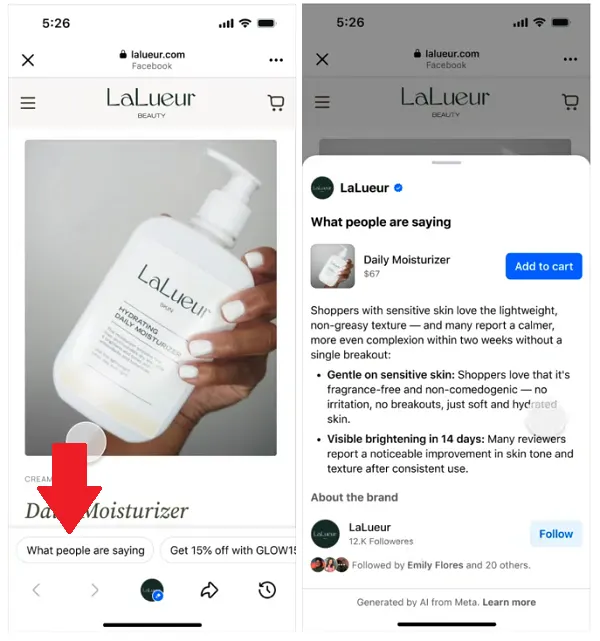
Meta said that the updated checkout experience will enable users to make a purchase with just one tap, via partnerships with payment providers, beginning with PayPal and Stripe.
Which is a far cry from Meta’s attempt to build its own in-app currency a few years back, which never really got off the ground. Now Meta’s leaning on established payment providers instead of going it alone.
Meta’s also expanding Facebook shops to more businesses in Canada, Mexico, Taiwan, Japan, Korea, UK and Australia, while it’s also looking to provide more product information within ads to cater to discovery.
Meta’s also testing product set optimization, which will give retail media networks more control over which products are promoted, while it will also provide more granular detail on specific product performance.
As explained by Meta: “For example, a RMN can now run a campaign for a beauty brand, ensuring the brand’s budget only promotes their new lipstick line, instead of the retailer’s entire cosmetics catalog. With product set optimization, the beauty brand now has clearer performance data and more focused campaign spend for the products that matter to them.”
Meta’s also expanding its product showcase feature to Reels and Stories, and making it available for app optimization campaigns, while it’s also giving more brand partners access to its Business AI, which enables businesses to create their own, dedicated AI agent for their website, powered by Meta’s evolving AI tools.
“After introducing retailers to Business AI on ads at Shoptalk last year, we’ve brought the capability to new markets across Asia and Latin America and introduced new features like lead capture for our messaging platforms,” Meta said.
These expanded options will provide more sales opportunities within Meta’s apps, which is clearly a focus as it looks to utilize its AI matching tools to highlight more relevant products to each user.
And Meta does have a lot of data on what people are interested in, and what they’re likely to engage with. That could eventually see it well-positioned to drive more sales activities via direct links in its apps.