Mark Zuckerberg’s quest for artificial intelligence supremacy could be poised to take its next major step, with Axios reporting that Meta’s Superintelligence group is close to launching its first AI models.
Meta formed its Superintelligence project in June, with Zuckerberg announcing his intention to “bring personal superintelligence to everyone” in order to accelerate human progress and usher in “a new era of personal empowerment.”
Meta reportedly offered multi-million dollar contracts to some of the biggest names in AI development to get them to join this new team, including Alexandr Wang. Wang now leads the project after moving to Meta from Scale AI in 2025, when Meta acquired the company for $15 billion, according to Business Insider.
Now, it may be time to see what they’ve been working on.
As per Axios: “Meta is preparing to release the first new AI models developed under Alexandr Wang, with plans to eventually offer versions of those models via an open source license, Axios has learned.”
The new models will be a major showcase of Meta’s expanding AI vision, with the company investing hundreds of billions of dollars into AI development as Meta shifts focus to AI as the guiding technology of our time.
Meta’s new AI models will also reportedly help it catch up with rivals in the AI space, after its last Llama release fell significantly behind in AI benchmarks. As a result, these new models carry significant weight of expectation, as Meta looks to move beyond the current state of AI tools and towards the next stage, where machines will be able to actually simulate human thought processes.
However, some experts don’t think this is possible, at least not using the current industry-leading AI development approach.
The latest AI tools are not actually intelligent at all, with the systems essentially being large-scale spreadsheets, using cross-matching data logic to present human-like responses.
But they’re not thinking. No matter how well these tools simulate human conversation, there’s no thought going on behind the answers. AI tools simply match the query posed to them with what data input suggests could be the likely answer.
That, according to some, is the wrong approach to achieve thinking machines, or artificial general intelligence, which is the holy grail of AI development.
Indeed, Meta’s own long-time head of AI development, Yann LeCun, quit the company last year due to fundamental disagreement over the best way forward on AI development.
According to LeCun, who’s also considered one of the most experienced and respected minds in AI development, these latest AI models are a distraction from developing a real breakthrough in the field.
“A lot of people in the AI research and development community are perceiving the idea that perhaps we have a shot within the next decade or so of building machines that have a blueprint that might eventually reach human level intelligence,” LeCun said at a Joint Mathematics Meetings conference in March 2025. “The estimates about how long it’s going to take vary by huge amounts, with the most optimistic people saying that we’re already there. Some people who are raising lots of funds are claiming it’s going to happen next year, but I don’t believe so myself.”
LeCun said that, through open source development and a focus on key models, it could be possible to develop a human-level AI intelligence framework “within the next decade or half decade,” which would lead to systems that are capable of actual planning and reasoning.
But LeCun doesn’t believe that the current generative AI models are the right framework to build upon in this respect.
Meta has been researching artificial general intelligence development for some time, including its “Brain Decoding” process, which aims to simulate neuron activity and understand how humans think.
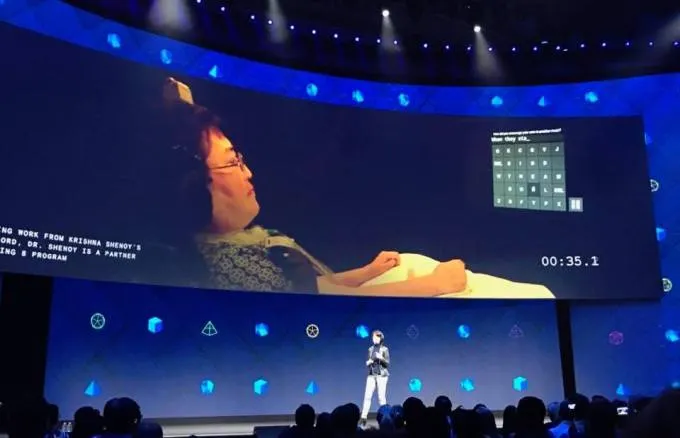
Meta first previewed this project in 2023, and that seems far more aligned with building digital systems that can actually replicate human thought processes, as opposed to presenting superficial, data-matched answers via a souped-up version of autocorrect.
Where Meta’s Superintelligence development falls within this will be interesting to note as a signal for the future of AI development.